Our Educational Philosophy
How We Track Your Childs Progress
Our tracking system ensures you know exactly how your child is developing through documented observations, weekly reviews, and progress ensuring children develop with a broad range.
.svg)


Our tracking system ensures you know exactly how your child is developing through documented observations, weekly reviews, and progress ensuring children develop with a broad range.
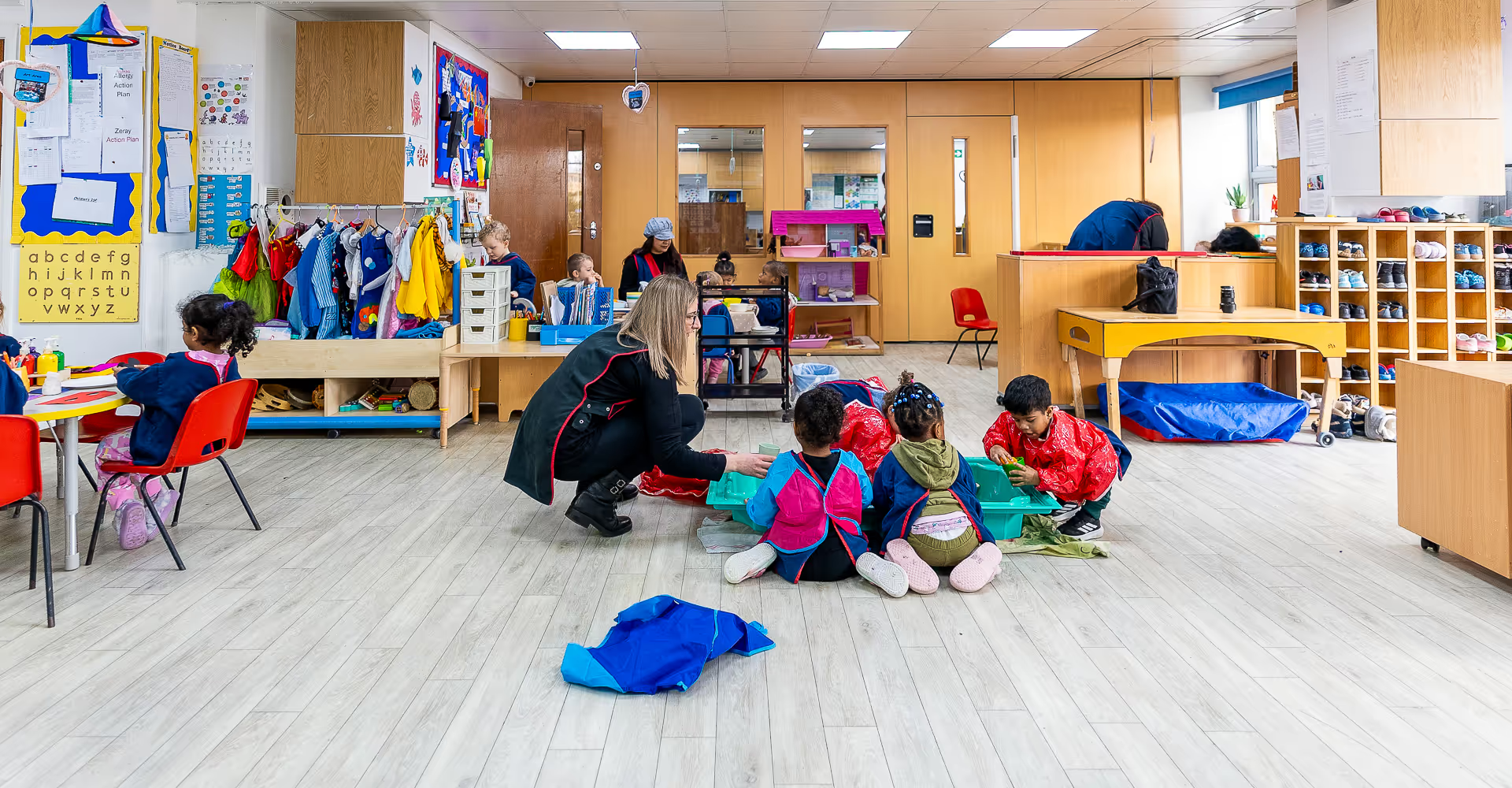
The Baseline Assessment establishes your child's developmental position across all EYFS areas within the first two weeks of attendance.
Our practitioners observe how your child navigates free play, responds to group activities, and engages with Montessori materials building a picture of where they are right now.
This initial assessment covers communication, physical development, personal and social skills, literacy foundations, and mathematical thinking. We note what your child can do confidently, what emerges with support, and what remains just out of reach.
"Staff skilfully plan from their key children's individual learning needs and respond to these exceptionally well." — Ofsted Report
The Baseline differs from a test, it is the starting line from which every subsequent step is measured.
Your child's Key Person captures daily observations of interests and breakthroughs for each child in their care. This dedicated practitioner builds a relationship with your child over months and years and understands them well.
"Staff know their key children extremely well... Staff have remarkable relationships with children and their families." — Ofsted
These observations feed directly into the Planning Cycle, shaping Next Steps for the following week.
Learn more about our team's qualifications and stability on Our Team.
Each week, our staff review individual children's progress in team meetings. They identify gaps, plan targeted activities, and adjust the following week's learning environment accordingly.
This ongoing cycle keeps your child moving forward with activities shaped by their specific developmental needs.
If your child has mastered letter sounds, we plan blending activities. If they're working on pencil grip, we introduce targeted fine motor work. Every child's week is designed around their individual requirements, not a one-size-fits-all curriculum.
For a deeper look at how we structure focused learning time, see our Work Cycle approach.
The areas are designed to interconnect. A child developing strong communication skills will find literacy easier; a child confident in relationships will take more risks in physical play.
Our practitioners plan activities that deliberately weave multiple areas together, so a single morning might develop language, social skills, and fine motor control simultaneously.
The holistic structure means we're building a whole and complete foundation by design.
Our tracking covers all seven areas of EYFS development—not just the academic skills parents often focus on.
The EYFS framework organises child development into seven interconnected areas. Three Prime Areas form the foundation, and four Specific Areas build upon them.
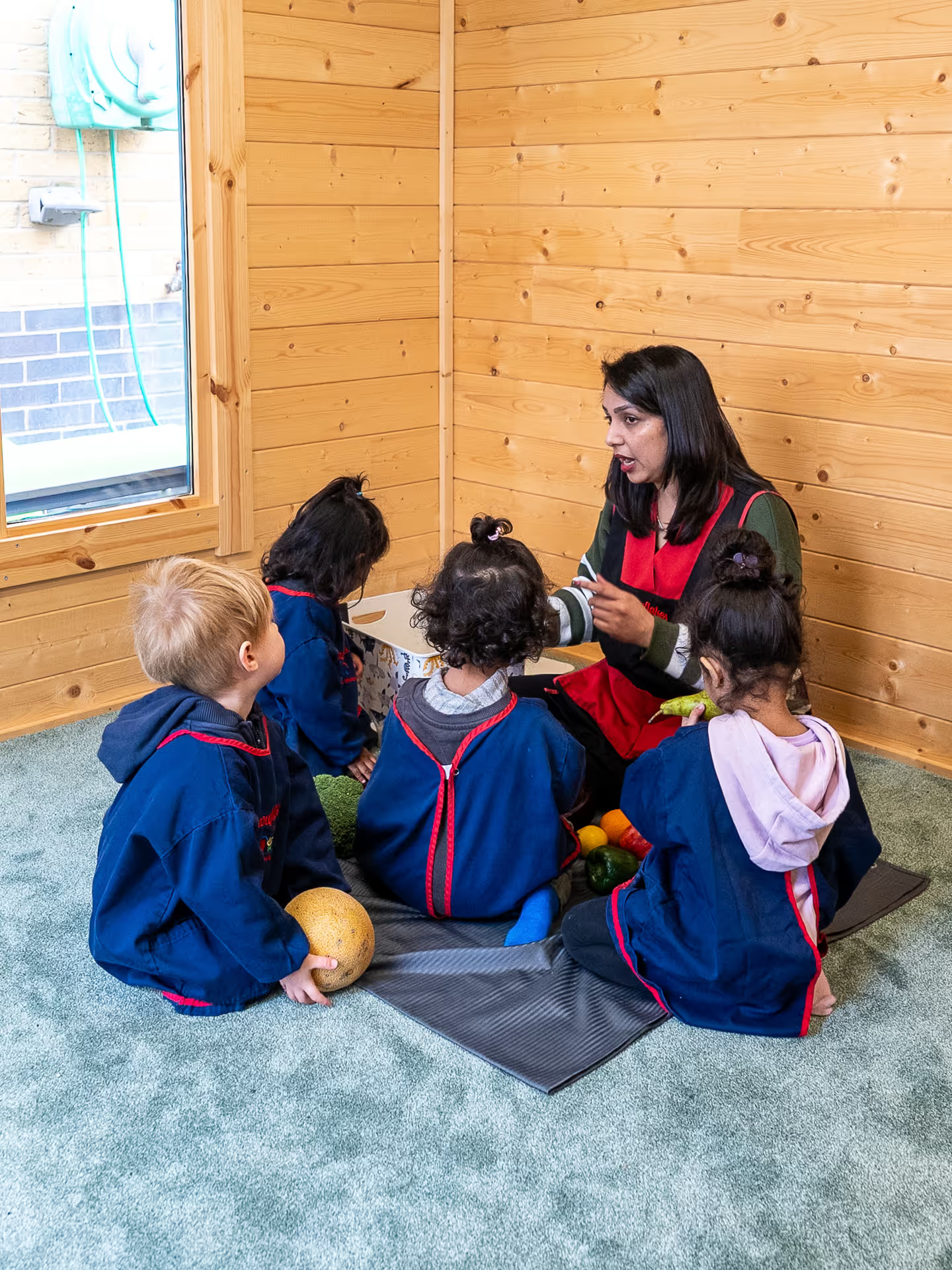
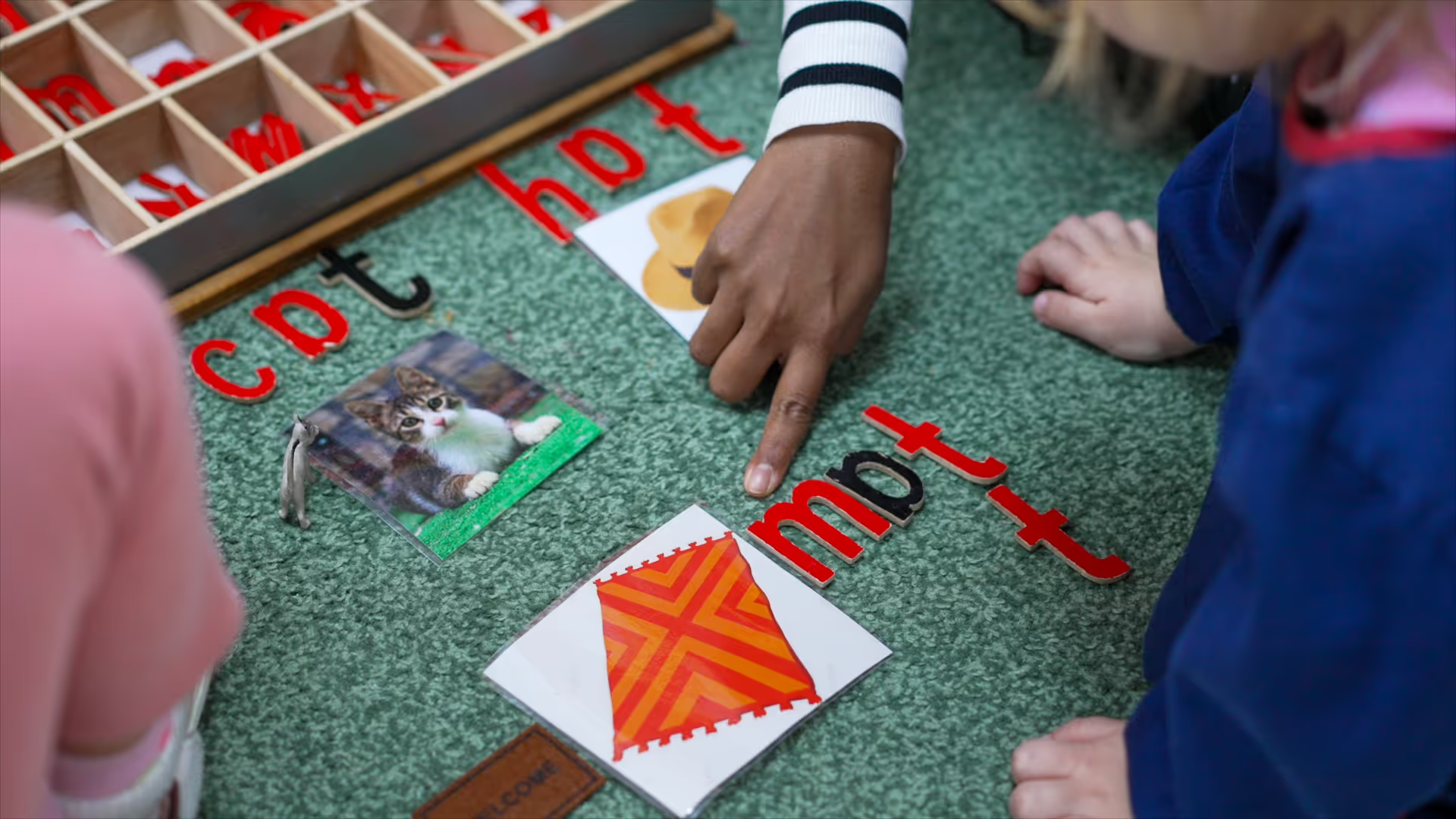
Next Steps derive from individual observations, not age-band checklists. At Snowflakes, planning reflects what your child's Key Person observes about their unique developmental path.
These goals are specific, time-bound, and tracked. They emerge from what your child's Key Person observes about their interests and readiness, not from generic developmental expectations.
An example of this would be as specific as practicing forming the letter 's' using sandpaper letters during a Work Cycle.
"Staff skilfully plan from their key children's individual learning needs and respond to these exceptionally well." — Ofsted
This approach reflects our Montessori-EYFS hybrid philosophy—using child-led interests to inform structured developmental goals.
Understanding the regulatory foundation helps explain why this tracking matters. The Early Years Foundation Stage (EYFS) establishes the statutory learning and development standards for all children aged 0-5 in England.
Mandated by the Department for Education and inspected by Ofsted, this framework ensures every registered nursery meets consistent benchmarks for safety, welfare, and educational quality.
EYFS serves a purpose beyond regulatory compliance—it provides a developmental architecture. The framework specifies not only what children should learn, but how practitioners should observe, assess, and plan for each child's next steps.
At Snowflakes, we treat EYFS as a foundation, then build further. Our staff use the framework's structure to create individualised learning pathways.
When combined with our Montessori-inspired work cycle, EYFS becomes a powerful tool for intentional development rather than passive supervision.
Reading about personalised planning is one thing. Seeing your child's actual journey on our system is another.
Book a visit to review real Learning Journeys and meet the Key Person who will guide yours.
Return to our Philosophy overview to explore how Individual Learning Journeys connect to our broader educational approach.