Project icons
Project icons
Project photo

Refining a Balanced Approach

As parents, choosing the right early education approach for your child can feel overwhelming. You want an environment that nurtures their natural curiosity while ensuring they're ready for the next steps in their learning journey.

With over 22 years of experience, we've seen how combining Montessori's child-led philosophy with EYFS's structured guidance creates confident, independent learners who thrive in school and beyond.

Understanding the Core Differences

In this guide, we'll explore the key differences between these approaches and explain why our integrated model offers the best of both worlds and why we've integrated the Montessori method with the Early Years Foundation Stage (EYFS) framework—a balanced hybrid that draws on the strengths of both to support holistic child development.

Key Principles Of The Montessori Method

Developed by Dr. Maria Montessori in the early 1900s, this approach views children as naturally eager learners. It emphasizes:

  • Child-Led Learning: Children select activities based on their interests, promoting intrinsic motivation and a love for discovery.
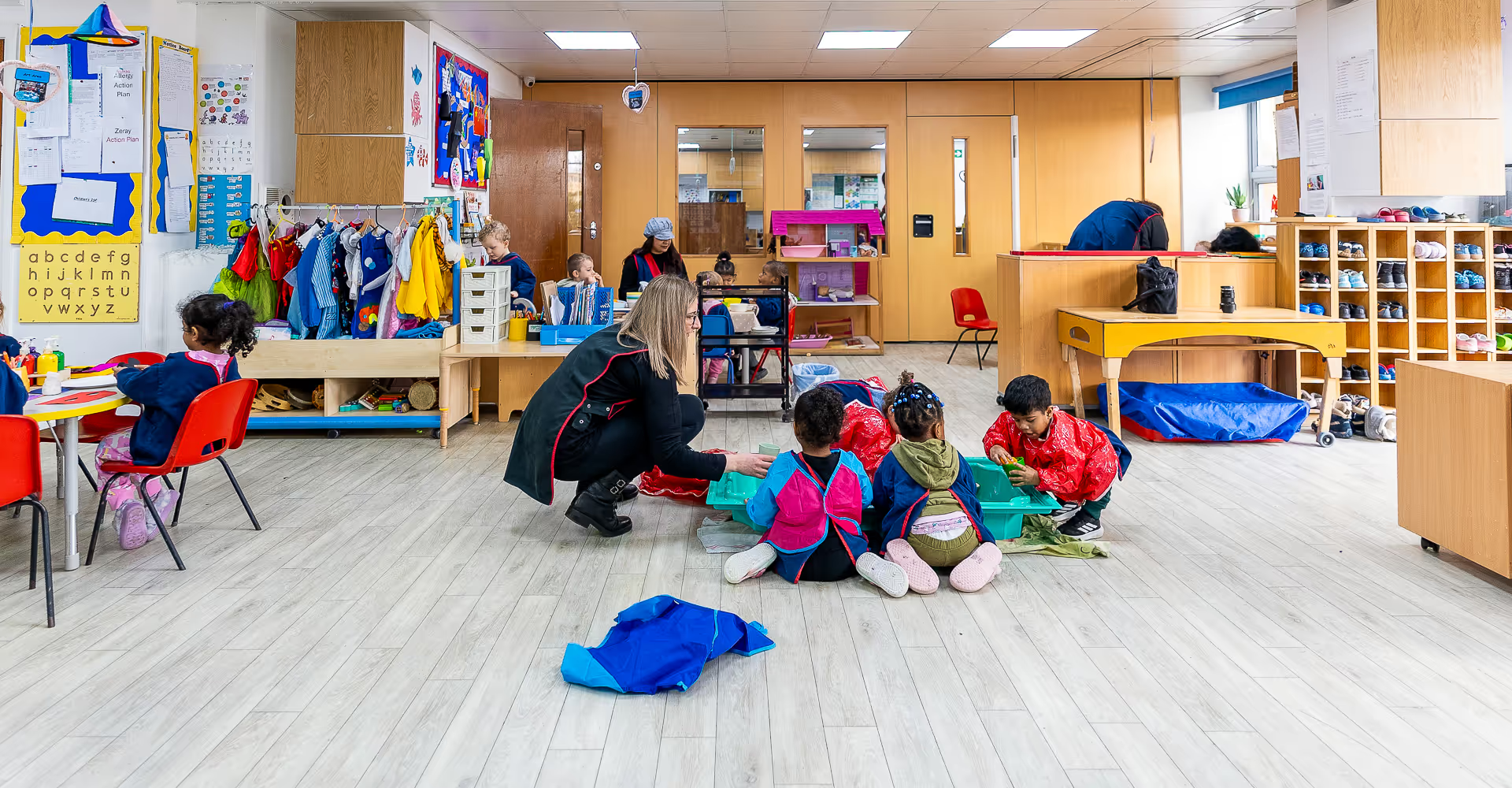
  • Prepared Environment: Classrooms are designed with hands-on materials that encourage sensory exploration and practical skills, like pouring or buttoning.
  • Individual Pace: Multi-age groups allow children to progress at their own speed, building confidence through self-correction and repetition.
  • Holistic Focus: It nurtures independence, problem-solving, and social skills in a calm, respectful setting.

Parents often choose Montessori for its ability to spark creativity and resilience, helping children become self-reliant thinkers who aren't afraid to try new things.

Key Principles of the EYFS Framework

The EYFS is the UK's statutory framework for early years settings, outlining standards for children from birth to age five. It centers on:

  • Structured Development: Progress is tracked across seven areas—Communication and Language, Physical Development, Personal, Social and Emotional Development, Literacy, Mathematics, Understanding the World, and Expressive Arts and Design.
  • Play-Based Guidance: Activities are flexible and child-centered but aligned with clear learning goals to ensure balanced growth.
  • Assessment and Accountability: Regular observations help identify needs, with documented milestones to support school readiness.
  • Inclusivity and Safeguarding: It emphasizes safety, emotional well-being, and parent involvement for a nurturing foundation.

Families appreciate EYFS for its reliability—it provides reassurance through transparent progress reports and prepares children for the routines of primary school.

Differences and Potential Challenges

While both promote play and development, their differences can highlight gaps in pure implementations:

  • Freedom vs. Structure: Montessori's emphasis on choice can sometimes leave children less prepared for group activities or instructions in school settings. Conversely, a strictly EYFS approach might limit self-initiative if it becomes too directive.
  • Assessment Styles: Montessori relies on observation without formal benchmarks, which may concern parents wanting detailed progress insights. EYFS's systematic tracking ensures no area is overlooked but could feel less personalized.
  • Long-Term Preparation: Pure Montessori excels in building independence but might not fully align with school expectations. Pure EYFS ensures readiness but risks fostering dependency on adult guidance.

These contrasts reflect common parental concerns: You want your child to be independent yet adaptable, creative yet academically prepared. Neither approach alone addresses every need perfectly, which is why integration is so valuable.

‍

‍

From Montessori

Tools That Teach Without Constant Correction

When Maria Montessori designed her first classroom materials in the early 1900s, she built something revolutionary: tools that teach without constant adult correction.

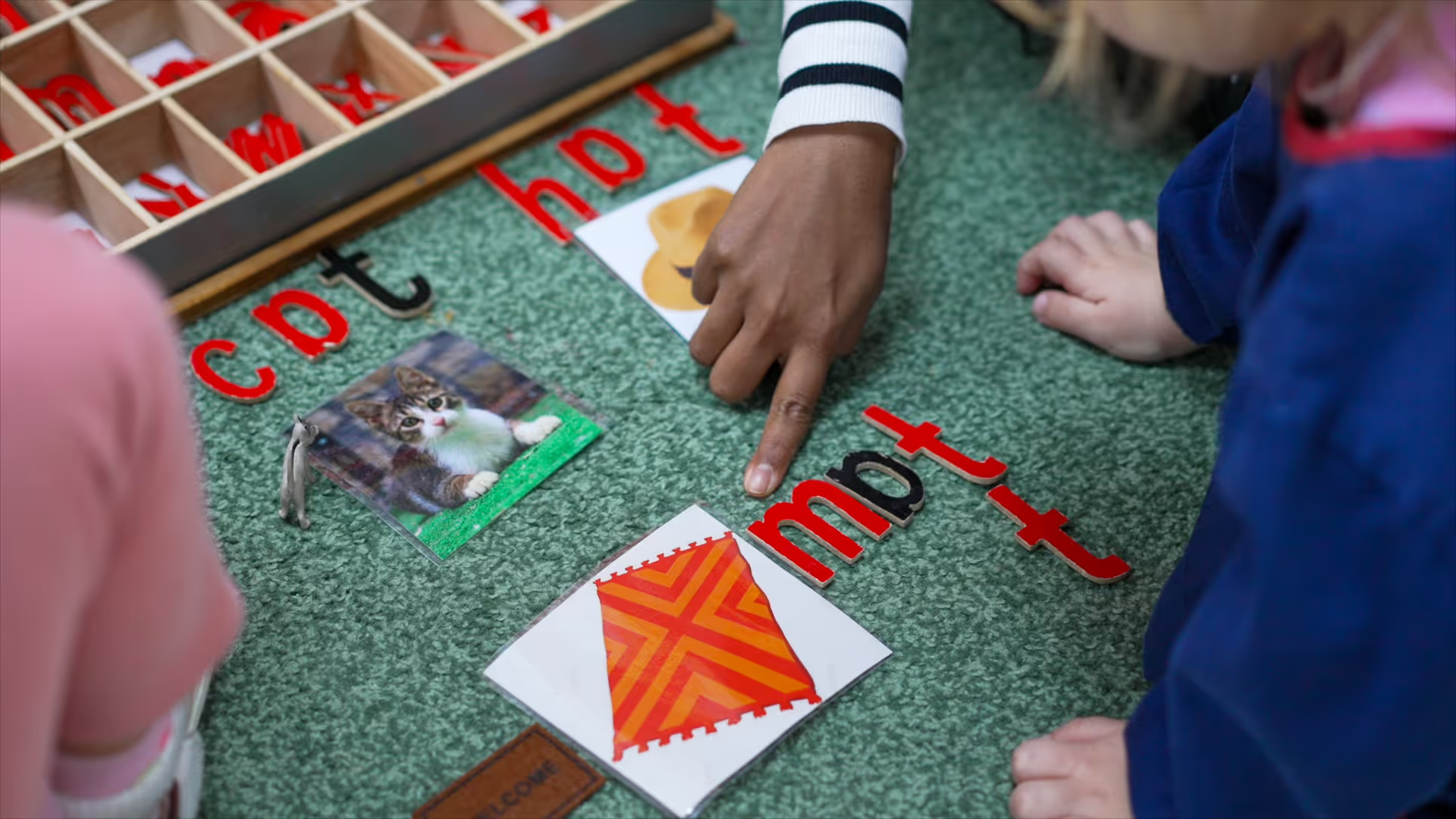
Montessori Materials in our prepared environment enable self-directed learning through sensory manipulation and built-in error control. The Pink Tower, for instance, consists of ten graduated cubes. A child stacking them incorrectly sees immediately that something is wrong—the tower wobbles, the sizes don't align. No adult needs to say "try again." The material itself provides the feedback.

This approach builds something crucial: a child who isn't afraid to attempt difficult things. When mistakes are learning opportunities rather than failures to be corrected, children develop resilience and genuine problem-solving capacity.

What You'll See in Our Rooms

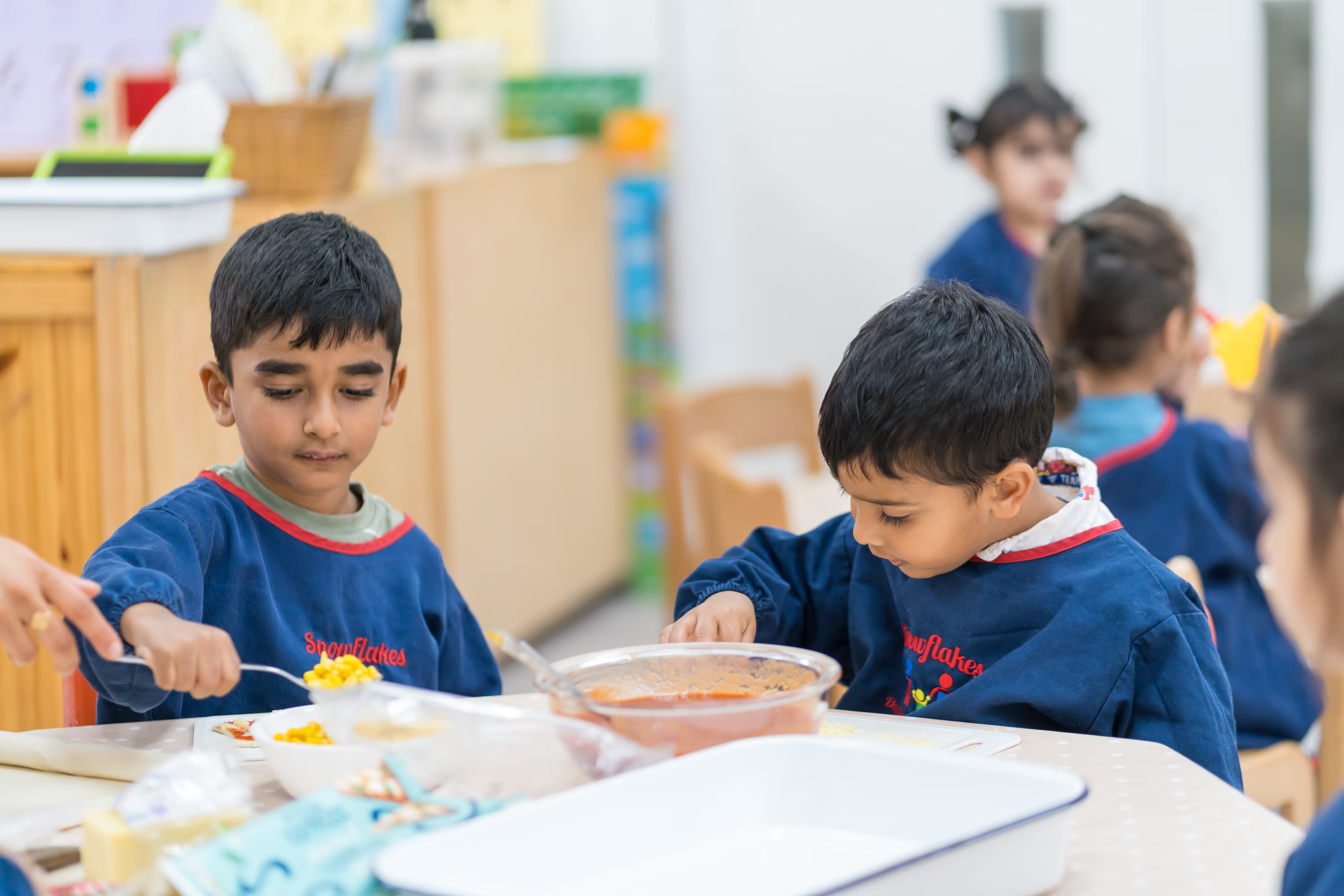
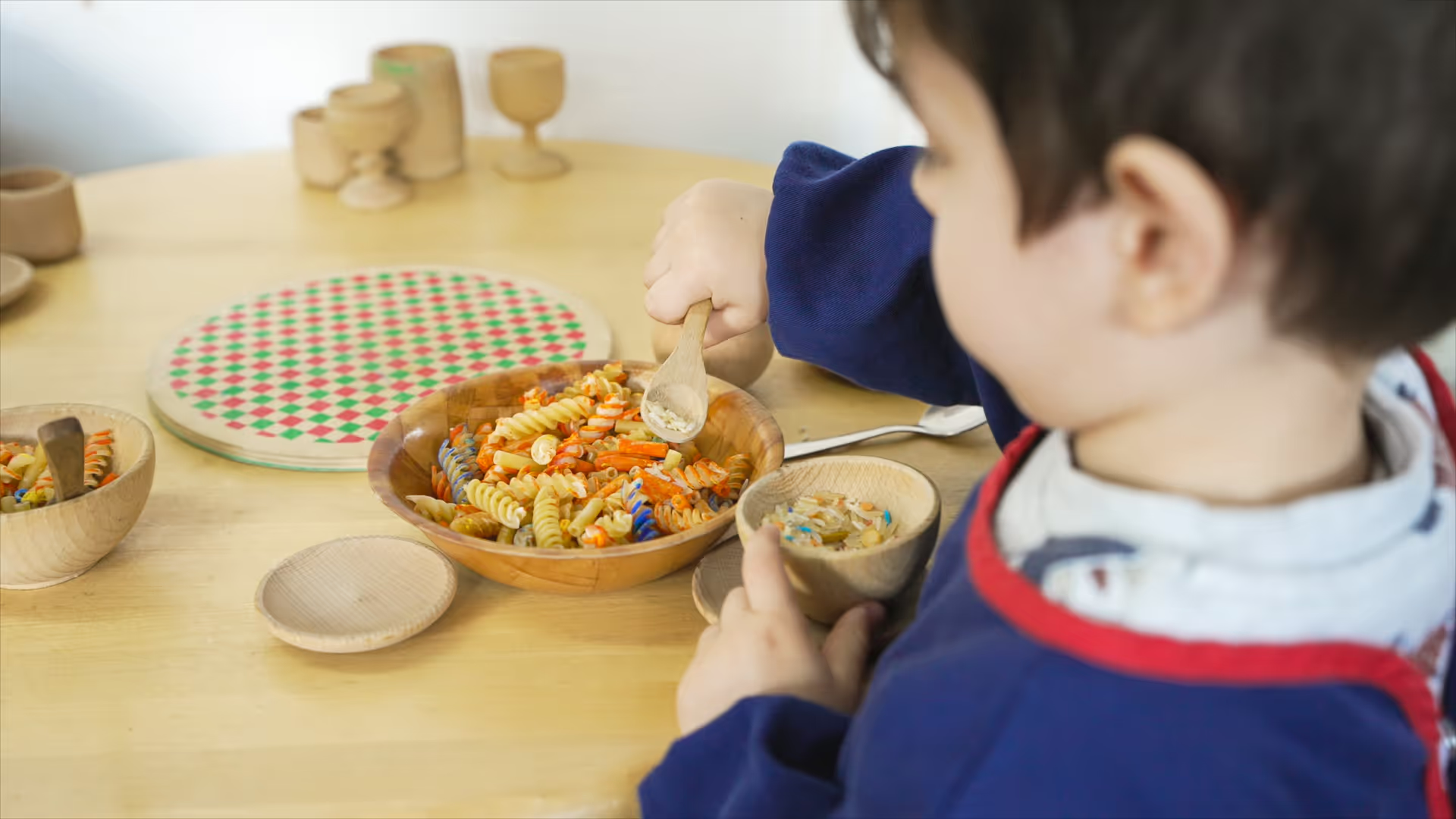
Our prepared environment features carefully curated Montessori materials designed for specific developmental purposes. Sandpaper letters introduce phonics through touch. Number rods make abstract mathematical concepts tangible. Practical life stations—where children pour, button, and prepare food—build fine motor control and independence.

Each material isolates a single skill, allowing deep focus without distraction. Children return to the same materials repeatedly, building mastery through repetition they choose themselves.

To see how we structure these self-directed learning periods, visit our Work Cycle curriculum page.

From EYFS

No Aspect of Development Left to Chance

Some parents worry that child-led learning means children simply play all day without measurable progress. Our EYFS integration addresses this concern directly.

The Early Years Foundation Stage provides statutory developmental benchmarks across seven areas of learning: Communication and Language, Physical Development, Personal Social and Emotional Development, Literacy, Mathematics, Understanding the World, and Expressive Arts and Design. These seven areas ensure no aspect of your child's development is left to chance.

Systematic Tracking, Individual Planning

At Snowflakes, we conduct entry assessments within a child's first two weeks. Our staff identify where each child sits against age-appropriate expectations, then create individual next steps.

This isn't a one-time snapshot. Every term, we reassess progress and adjust our approach. When a child masters a skill, we document it and identify the next challenge. When a child needs more support, we plan targeted activities. The EYFS framework makes this systematic tracking possible—and mandatory.

Your Window Into Progress

We document observations through digital learning journals, giving you visibility into exactly where your child stands. Photos, videos, and written observations show development as it happens.

You'll see this transparency firsthand at your termly progress meeting with your child's key person, who walks through developmental achievements and collaborates with you on goals for the coming months.

Engineered, Not Accidental: Our Weekly Planning Process

This blend doesn't happen by accident. Every week, it's actively managed.

Our staff meet weekly to review individual children's progress, identify developmental gaps, and plan activities that address specific needs. A child excelling in literacy but struggling with social confidence gets activities designed for their specific profile. A child who's mastered practical skills but needs numeracy support gets targeted number work.

We don't hope for balanced development; we engineer it—then document it so you can see exactly what your child is achieving.

The weekly cycle:

  1. Review — Staff analyse each child's observations from the past week
  2. Identify — Gaps and next steps are pinpointed for every child
  3. Plan — The following week's activities are designed to address specific needs
  4. Deliver — Children experience a week shaped by their individual requirements
  5. Document — Progress is captured, and the cycle begins again

This systematic approach is why our outcomes are consistent, not coincidental. It's why 90% of our children read before Reception. And it's why teachers can spot our graduates within a week.

Ready to see our hybrid approach in action? The difference between reading about our curriculum and watching your child engage with it is profound. Book your visit and observe a Work Cycle session—you'll see exactly how Montessori freedom and EYFS structure work together in practice.

See Real Journeys: Where Play Meets Education!

Reading about personalised planning is one thing. Seeing your child's actual journey on our system is another.
‍
‍Book a visit to review real Learning Journeys and meet the Key Person who will guide yours.

‍Return to our Philosophy overview to explore how Individual Learning Journeys connect to our broader educational approach.

Meet The Friendly Faces Our Educators

Dive Deeper Find Out More About Us

Reviews of happy parents

August 2023
Reviews of happy parents

August 2023
Reviews of happy parents

August 2023
Reviews of happy parents

August 2023
Kiddy Icon
Kiddy Icon
PngPng